How Pack3D fits more
Overhangs nest. Outlines alone can't.
Many printed parts are wider above than at the base. Pack3D sees the full 3D shape, so it can tuck one part under another's overhang, like the tortoise legs below. Outline-only nesting has to leave that space empty.
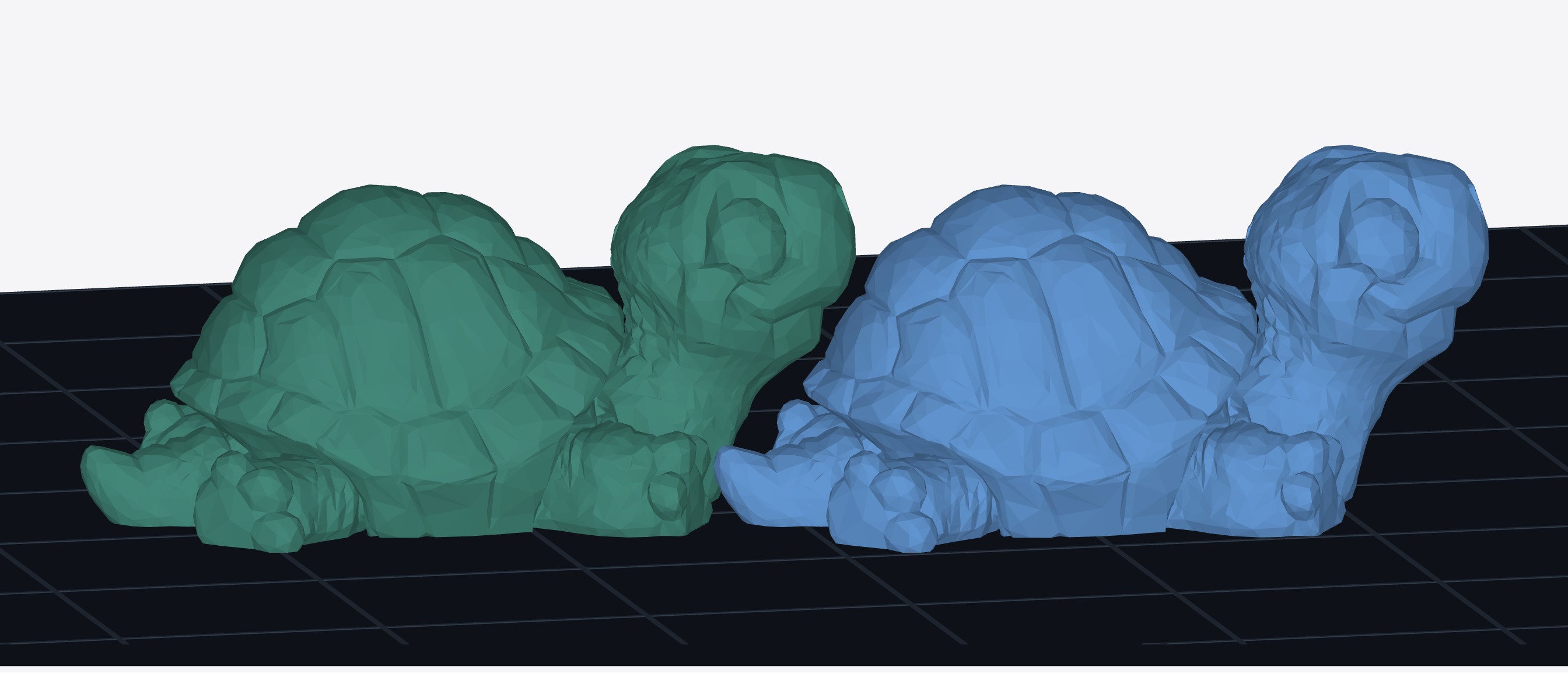
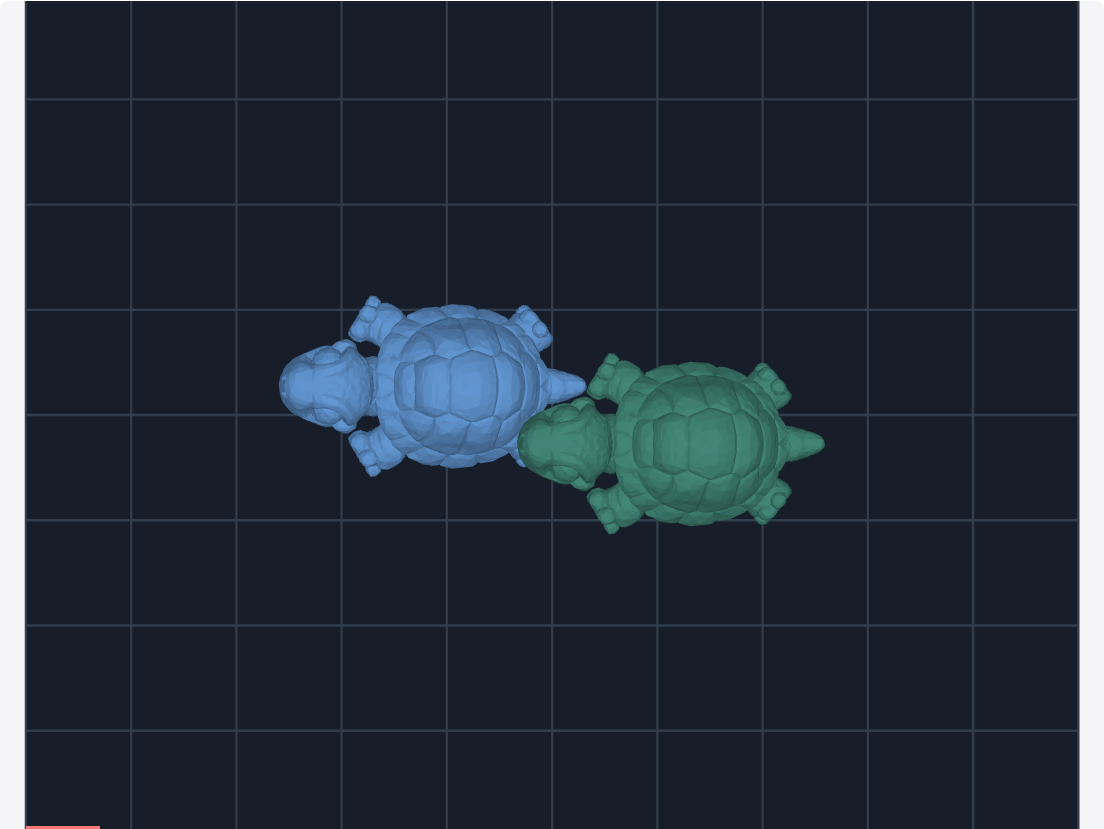
From aboveThe silhouettes overlap.
Outline-only nesting would have to reject this placement and leave the space under the shell empty.
- Plate
- Bambu Lab P1S
- Parts on this plate
- 23
- Overlap from above
- 37 pairs
- Clearance
- 0.2 mm, checked in 3D
The difference
Two ways to read a part.
Across the 18 parts in our benchmark, every plate came out denser. See the benchmark
- Outline nesting
- Packs the footprint seen from above. Anything under an overhang counts as occupied, even when it is empty.
- Pack3D
- Checks the full 3D shape. A part may tuck beneath another's overhang when the gap is at least your clearance.
- Clearance
- Yours to set per job. It is kept in 3D, under overhangs as well as beside them.
- On this plate
- 37 pairs of parts in this 23-part layout overlap when seen from above. Every one is checked in 3D.
Try it on your own part.
5 jobs a month, free. No card needed.